What actually happens when you get a photo classification wrong in Shutter Story? That’s the question most people search after their first hour, because the game never spells out the consequences until you’ve already made the mistake.
| Genre |
Psychological horror, investigation |
| Playable Character |
A photo editor working for Eli’s family |
| Core Tool |
SpectralAware 2.1 analysis software |
| Setting |
Eli’s house, present day and archived footage |
Eli’s Photo Album and the SpectralAware Workstation
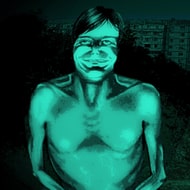
The premise is simple to state and unsettling to actually sit through. Your friend Eli is convinced his family’s house is haunted, his parents dismiss it, and you’re the one who ends up combing through decades of family photos and home videos looking for proof one way or the other. You’re not doing this with your eyes alone, though. Everything runs through SpectralAware 2.1, an in-game analysis tool that lets you adjust exposure, contrast, color channels, and noise reduction on every image and clip until something buried in the frame becomes visible.
The interface itself is part of the horror. It’s styled like an early-2000s operating system, all soft gradients and outdated icons, which makes the eventual anomalies feel more invasive because they’re intruding on something that should feel safe and familiar.
Sorting Anomalies Into Apparitions, Simulacra, and Strange Lights
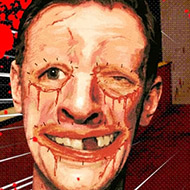
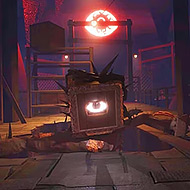
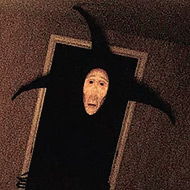
Once you spot something wrong in a photo, Shutter Story asks you to classify it using an in-game manual, sorting each finding into categories like Apparitions, Simulacra, Strange Lights, or Demonic Entities. This isn’t cosmetic. Misclassifying what you find can influence how conversations play out later and how aggressively the haunting escalates once you leave the desk and walk through Eli’s house in first-person.
- Adjust the photo or clip until an anomaly becomes visible
- Cross-reference the manual to identify what category it fits
- Log the classification before moving to the next item
- Carry that judgment into the first-person sequences that follow
Players who enjoy methodical, detail-oriented puzzle solving tend to get the most out of this loop, since the difference between a Simulacra and a genuine Apparition can hinge on a single subtle detail in the noise reduction slider.
How Difficulty Shifts From Photo Lab to First-Person Horror
Early rounds of analysis are forgiving. The anomalies are close to the surface, and getting a classification wrong barely nudges the story. By the time you’ve worked through a large chunk of the 80-plus photos and clips the game includes, the anomalies get subtler and the stakes attached to misreading them go up noticeably. That’s also roughly when the first-person exploration sections stop feeling like a break from the desk work and start feeling like the desk work’s direct consequence.
Beginners often rush the slider adjustments, treating them as a formality rather than an actual investigation, which is the single most common reason people miss anomalies on a first playthrough. Slowing down and testing multiple filter combinations on the same image is the difference between catching something and walking past it entirely.
Walking Through Eli’s House Once the Desk Isn’t Safe Anymore
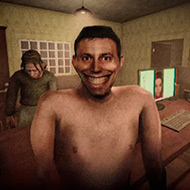
The first-person sections are where Shutter Story earns its psychological horror label most directly. You leave the workstation, step into Eli’s house, and the consequences of whatever you classified upstream start manifesting physically around you. It’s a structural choice that a lot of players single out in discussions, because it means the horror isn’t confined to what’s on a screen inside the screen, it follows you into the space itself.
Community vocabulary around the game has already started forming, with players referring to the classification manual simply as “the book” and using shorthand like “SA runs” to describe a full pass through a batch of photos with SpectralAware. If you’ve spent time in communities built around Home Safety Hotline or similar analog-horror titles, the loop will feel immediately familiar, though the multi-generational mystery buried in Eli’s family history gives it its own identity.
What Players Debate About Shutter Story
The most divisive point among players so far is pacing between the photo-analysis sections and the first-person horror sequences. Some find the desk work meditative and the horror sequences an earned payoff; others feel pulled out of the tension every time they’re sent back to adjust sliders after a genuinely frightening house sequence. There’s no consensus yet, and it’s one of the more common threads in community feedback, especially since detailed impressions are still coming primarily from the demo rather than the full release.
One detail almost every demo player brings up unprompted is the ambient hum of the workstation itself, a low electrical drone that’s barely noticeable at first and becomes genuinely uncomfortable once you’ve logged a dozen disturbing photos in a row. It’s not scripted to escalate, it just sits there the whole time, and that stillness is exactly why people remember it.
- How does SpectralAware 2.1 actually work in Shutter Story? It’s the in-game tool you use to inspect every photo and video, letting you tweak exposure, contrast, color channels, and noise reduction until hidden anomalies surface. Getting the settings right is often the only way to notice certain details the game never points out directly.
- What are the classification categories and why do they matter? Findings are sorted into groups such as Apparitions, Simulacra, Strange Lights, and Demonic Entities using an in-game manual. Choosing the wrong category isn’t just a labeling error, it can shift how later conversations and house events unfold.
- Is the Shutter Story demo the same experience as the full game? The demo covers roughly the first 45 minutes, including 15 photographs, 3 home videos, and 3 first-person sequences inside Eli’s house, giving a fairly complete sense of the core loop even though the full multi-generational story extends well beyond it.
Shutter Story turns a fairly ordinary premise, help a friend prove his house is haunted, into something that lingers specifically because of how much responsibility it hands you at that SpectralAware desk, and how directly Eli’s house makes you feel the weight of every classification you got wrong.