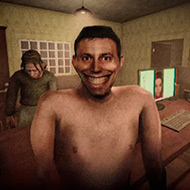
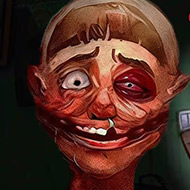
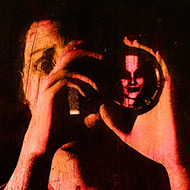
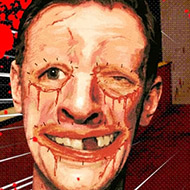
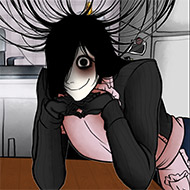
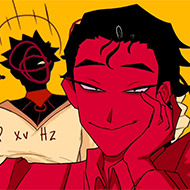
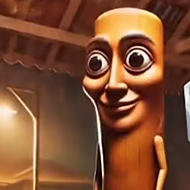
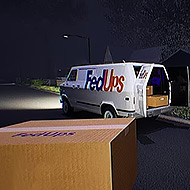
No, I’m not a Human looks like a door-answering simulator with a spooky coat of paint, but it plays like a slow interrogation where every wrong guess costs you something you can’t get back. The premise is blunt: the sun has turned dangerous, people can only move at night, and something called a Visitor has learned to knock exactly like a person would.
| Genre |
First-person psychological horror simulation |
| Setting |
A house during an apocalyptic heatwave |
| Core Mechanic |
Questioning guests and deciding who to let inside |
| Structure |
Four escalating nights with branching endings |
The Visitors Behind Every Knock
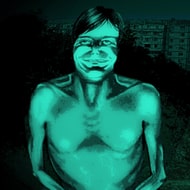
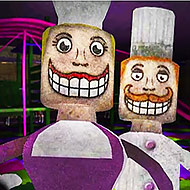
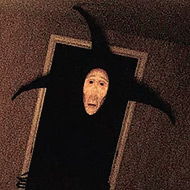
Every guest who arrives at the door in No, I’m not a Human could be an ordinary person seeking shelter, or a Visitor wearing a convincing disguise. The game gives you signs to check: small physical details, odd phrasing, behavior that doesn’t quite track. None of them are guaranteed, and that’s the point.
Newcomers tend to treat these signs like a checklist, trusting them the same way every time. That approach falls apart quickly, because the same sign that flags a Visitor on one night can belong to a perfectly ordinary guest on another. The game is deliberately inconsistent about this, and players either learn to live with the ambiguity or spend the whole run second-guessing themselves.
What separates a confident player from a paranoid one is pattern recognition across a full night, not any single interaction. Watching how a guest behaves once they’re already inside tells you more than the signs at the door ever will.
Energy as Your Real Limiting Resource
Every action, from checking a sign to opening the window, draws from a limited energy bar. It resets each night, but it never feels like enough once guests start arriving in numbers, which happens fast once the first couple of nights are behind you.
Players who burn through energy early on cautious over-checking often find themselves letting later guests in blind, which is its own kind of gamble. Energy management ends up mattering just as much as reading the guests correctly, and it’s a mechanic the community brings up constantly when comparing runs.
Night One Through Night Four
The four nights of No, I’m not a Human escalate in a specific way. Night one and two are mostly about learning how Visitors present themselves and getting comfortable with the energy economy. Night three introduces guests who are noticeably more dangerous, and by night four the decisions you’ve made earlier start closing off options.
This structure means mistakes compound. A Visitor let in during night two doesn’t just cost you that encounter, it can shape what happens by night four in ways the game never spells out directly.
Players chasing the game’s secret endings tend to replay from night one repeatedly, since small early choices ripple forward more than they initially appear to.
The Window as Your Only Safe Advantage
Checking the window before answering the door is the one tool that costs energy but never puts you at direct risk. Experienced players lean on it heavily, using it to scout the surroundings and get a read on a guest before committing to an interaction.
- Check the window whenever energy allows, especially early in a night
- Cross-reference what you see outside with what the guest says once questioned
- Save enough energy for at least one full interrogation later in the shift
It’s a small habit, but it’s the difference between reacting to guests and actually managing the night.
Random Generation and Replay Value in No, I’m not a Human
Every new run reshuffles who shows up and what they say, so memorizing a specific guest’s script from a previous playthrough won’t save you the second time. This is by design, and it’s also one of the more debated aspects among players, since the same randomness that keeps runs fresh can also make an already ambiguous system feel inconsistent from one attempt to the next.
For players focused on unlocking every ending, this randomization is a feature rather than a flaw. It means no two paranoid nights play out identically, and comparing notes with other players becomes part of the appeal.
Endings Shaped by Every Choice in No, I’m not a Human
Letting too many guests in unchecked, turning away too many ordinary people, or choosing to stay isolated entirely all lead to different outcomes. The game doesn’t grade these choices as right or wrong, which is part of why its ending variety keeps coming up in community discussion.
Some of the more interesting conclusions sit behind secret conditions that aren’t hinted at during a normal run, which has been a point of frustration for players who’d rather not consult a guide to see everything the story has to offer.
How do you actually tell a Visitor from a real human? There’s no single reliable sign. You’re cross-referencing physical details, behavior once inside, and what a guest says under questioning, since any one signal alone can mislead you.
What happens if you run out of energy mid-night? You lose the ability to check signs or the window, which forces you to let guests in or turn them away based on instinct alone, a genuine risk late in a shift.
Does letting everyone in change the ending? Yes. Sheltering too many Visitors alongside real guests pushes the story toward specific, harsher outcomes, while overly aggressive turning-away leads elsewhere entirely.
No, I’m not a Human never tells you whether you got a night right, and that refusal to confirm your instincts is exactly what keeps players checking the window one more time before they knock back. The uncertainty around every Visitor at the door is the whole game, and it’s rarely comfortable in the way most horror simulations settle into by the end.