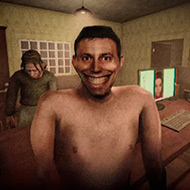
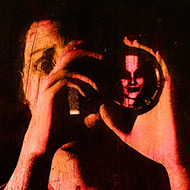
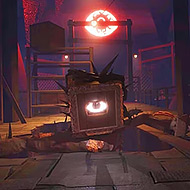
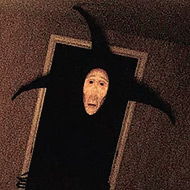
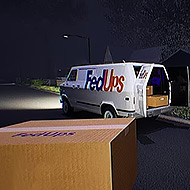
You’re mid-shift at the studio when the flash goes off and the print that slides out doesn’t quite match what you remember seeing through the lens. That small gap between what the camera catches and what you thought you saw is where Photomaly spends most of its runtime, turning a job-sim about running your father’s old photography business into something you start double-checking every order for.
| Genre |
First-person horror simulation |
| Structure |
Six in-game days per run |
| Core Loop |
Photograph customers, develop film, fulfill orders |
| Endings |
Two documented outcomes |
| Player Mode |
Single-player |
Taking Over the Studio in Photomaly
The setup is simple on paper: the studio your father left behind needs a new owner, and that’s you. Photomaly hands you the keys and expects you to run the place like a real shift worker would, which means restocking supplies before you run out mid-order, buying upgrades when the budget allows, and getting through a queue of customers who each want their photo taken and printed correctly. The game never pauses to explain what “correctly” means beyond the basics, so you’re left reading customer requests carefully and hoping you interpreted the framing right.
Early sessions are mostly about learning the physical rhythm of the studio. You’re loading film, adjusting the camera, walking product between stations, and keeping the register straight, all while trying not to fall behind. It plays like a slower job-sim at first, the kind where efficiency is the whole point and nothing seems out of place.
That calm doesn’t last. Once the first stretch of days establishes the routine, small details start shifting in the background of your shots, and the studio itself stops feeling like a neutral workspace.
Why the Frames: 4 Order Trips Up New Players
One of the more commonly misread moments early on is an order labeled Frames: 4. Newer players tend to treat the number as a literal photo count, printing four individual shots and wondering why the order comes back rejected. The label is describing something else about how the frames should be presented, and misreading it is one of the fastest ways to waste film and fall behind schedule on a day where time is already tight.
It’s a small moment, but it sets the tone for the rest of Photomaly: read the request, don’t assume it.
Anomaly Counters and the Slow Climb Toward Day 6
Difficulty in Photomaly doesn’t ramp through tougher enemies, it ramps through workload and attention. Day 3 introduces an anomaly target you need to document, and by Day 4 and 5 that target grows, forcing you to split focus between paying customers and whatever you’re supposed to be photographing on the side. Missing an anomaly window doesn’t always end your run, but it does change what evidence you’re carrying into the later days.
- Day 1 and 2 establish the studio loop with fixed, telegraphed scares
- Day 3 adds an anomaly counter you need to actively hunt for
- Day 4 and 5 raise that counter while keeping customer orders coming
- Day 6 pulls everything together into the family-photo sequence that decides your ending
By the time you reach Day 6, the game stops treating photography as a side task and turns it into the whole point.
Backrooms Detours and the Call for Help Sequence
There’s a stretch of Photomaly where the studio floor stops behaving like a floor, and the camera becomes your only reliable tool for finding a way back. This Backrooms detour rewards players who keep photographing the environment instead of just their assigned subjects. Later, a segment built around a stationary mannequin asks you to hold still and use the camera defensively rather than just documentally, which catches a lot of players off guard the first time through.
The Call for Help sequence layers voice input on top of this, though the game does provide a no-mic fallback for players who’d rather not rely on their microphone during a horror sequence. It’s one of the more divisive design choices in Photomaly discussions, since some players find the voice mechanic tense in exactly the right way, while others feel it breaks immersion when it doesn’t register properly.
Whichever route you take through it, this section is where the studio stops being a safe space entirely.
Family Matters and Reset Protocol
Photomaly currently has two documented endings, Family Matters and Reset Protocol, and which one you land on depends on how thoroughly you engaged with the anomaly system across the earlier days rather than any single Day 6 choice. Players comparing notes in the community generally treat Reset Protocol as the harder outcome to trigger cleanly, since it seems to require a more complete anomaly record than a casual first run tends to produce.
Whether that quota split is exact is still something the community is testing across clean saves, but the two endings read as genuinely different closures rather than a simple good-ending, bad-ending split.
What Photomaly Players Still Debate
Not everything about the design lands evenly. A section built around an instant-kill maze near the back half of the game has generated real frustration in reviews, with some players feeling it breaks the fairness the rest of the game establishes through telegraphed scares. It’s a fair criticism, and one the solo developer has acknowledged while continuing to patch smaller issues through a series of quickfixes.
An Endless Mode is currently in development for players who want to keep working the studio after the story wraps, which tells you something about how much of the appeal here is really about the day-to-day job rather than just the scares layered on top of it.
How long does it take to finish Photomaly?
A single story run through all six days runs roughly an hour and a half to two hours for most players, based on independent full playthroughs and community reporting. That’s shorter than it might sound given how much studio management is packed into each day.
How many endings does Photomaly have?
There are two publicly documented endings, Family Matters and Reset Protocol, both reachable from the Day 6 sequence depending on how much anomaly evidence you’ve gathered across the run.
Is Photomaly multiplayer?
No. Despite some community tagging suggesting otherwise, the official listing describes Photomaly as a single-player experience built around one studio, one camera, and one set of customer orders per run.
What makes Photomaly worth returning to isn’t just the scares, it’s how naturally they grow out of a job you were actually paying attention to, whether that’s rereading a Frames: 4 order or bracing for whatever’s waiting once the Backrooms floor opens up under you.