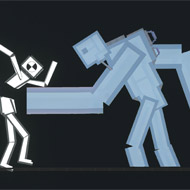
People Playground stands apart as a sandbox experience where a robust physics engine is the ultimate tool for creation and discovery. Free from predefined goals, it offers a palette of interactive objects, tools, and simulated human models, inviting players to explore the chains of cause and effect through hands-on experimentation and observation of emergent phenomena.
Physics-Driven Sandbox Systems
At its core, the game operates on a sophisticated simulation that dictates real-time interactions between force, material, energy, and environment. This dynamic foundation ensures that no two experiments yield identical results, rewarding creative thinking and a methodical approach to manipulating the game’s fundamental laws.
- Real-time physics reactions for all objects
- Dynamic collision and force calculations
- Temperature, pressure, and electrical interactions
- Structural stress affecting object stability
- Emergent outcomes based on player input
Human Models and Biological Simulation
The humanoid figures are complex systems unto themselves, featuring interdependent limbs, breakable joints, and internal components that respond with unsettling realism to trauma and environmental stress. This granular simulation allows for detailed study of biomechanics and the consequences of applied forces.
- Independent limb and joint simulation
- Internal systems responding to damage
- Realistic reactions to force and impact
- Gradual degradation rather than instant failure
- Complex cause-and-effect behavior
Tools, Weapons, and Interactive Objects
An extensive inventory of devices, from simple mechanical parts to advanced electrical components, serves as the building blocks for invention. Players can connect, power, and modify these elements to construct intricate contraptions, fostering a cycle of technical problem-solving and innovative design.
- Mechanical and electrical components
- Connectors for building custom systems
- Interactive tools for manipulation
- Modifiable objects with adjustable properties
- Unlimited combinations for experimentation
Creative Freedom and Scenario Design
The absence of scores or mandated objectives places the emphasis squarely on player agency. Individuals design their own challenges and narratives, from basic hypothesis testing to elaborate staged events, ensuring the experience remains fresh and driven by personal curiosity.
- No fixed objectives or win conditions
- Player-driven experimentation
- Custom scenarios built from basic components
- Replay value through varied setups
- Learning through trial and error
Common Player Questions and Practical Use
New players often ponder the game’s balance between creative freedom and systemic realism. The answer lies in using the predictable rules of the simulation to achieve unpredictable creative ends. Mastery evolves from patiently observing interactions and applying those lessons to more ambitious projects.
- Experiment with small setups before scaling
- Observe reactions instead of forcing outcomes
- Adjust object properties for precise results
- Use connectors to stabilize complex builds
- Refine experiments through repetition
Ultimately, People Playground provides a profoundly open-ended physics laboratory. By prioritizing systemic interaction over guided progression, it cultivates an environment where the journey of experimentation itself becomes the objective, satisfying a deep-seated curiosity about how things work—and how they break.